Diamond Rings
 Black Diamond Rings
 Emerald Rings
 Pink Sapphire Rings
 Ruby Rings
 Sapphire Rings
 Amethyst Rings
 Aquamarine Rings
 Citrine Rings
 Garnet Rings
 Morganite Rings
 Peridot Rings
 Rhodolite Rings
 Tanzanite Rings
 Topaz Rings


Article: Ruby Meaning: Passion, Power & the King of Gemstones
Ruby Meaning: Passion, Power & the King of Gemstones
Ruby has never been a quiet gemstone. Its red color carries warmth, intensity and unmistakable presence, giving it a natural association with passion, courage and vitality. Across cultures and generations, ruby has appeared in royal treasures, ceremonial jewels and deeply personal gifts. It has represented love in its most expressive form, but also strength, protection and the confidence to live with conviction.
The ruby meaning is therefore richer than romance alone. It brings together emotional depth and personal power, creating a gemstone that feels equally suited to an engagement, an anniversary, a July birthday or a milestone earned through determination.
What Does Ruby Mean?
Traditionally, ruby is associated with passion, love, power, courage and prosperity. Its color has long connected it with the heart and with blood as a symbol of life. These ideas are part of cultural history rather than scientific properties, yet they continue to shape how people choose and wear ruby today.
The ruby stone meaning can be intimate or ceremonial. A ruby may mark a relationship defined by devotion, recognize someone’s strength during a demanding period or celebrate a person whose presence is naturally confident. Unlike softer expressions of affection, ruby communicates feelings with clarity. It does not suggest hesitation.
This is why ruby symbolism remains so adaptable. The gemstone can represent romantic love, but it can also honor ambition, resilience, creative energy and the courage to begin again.
Why Is Ruby the Stone of Passion?
Red is one of the most emotionally immediate colors. It can suggest warmth, desire and movement before a jewel’s history is even considered. The name ruby comes from the Latin word ruber, meaning "red", and the gemstone’s color has made it an enduring emblem of love and passion. Ruby is also the red variety of corundum, with chromium contributing to its color.

Within fine jewelry, passion does not need to mean excess. A single ruby in a restrained setting can feel more expressive than a heavily ornamented design. Its color provides the emotion; proportion and craftsmanship provide balance.
Ruby as a Symbol of Power
Power is another central part of ruby meaning. Historically, important rubies were worn by rulers, nobles and those whose position required visible authority. The stone’s rarity, color and durability gave it a presence suited to objects intended to communicate status.
Yet modern power can be quieter. It may mean self-possession rather than display, or the ability to remain grounded while making a decisive choice. In this sense, ruby can represent confidence without aggression. It has intensity, but that intensity can be refined.
Why Is Ruby Called the King of Gemstones?
In ancient Sanskrit, ruby was known as ratnaraj, translated as “king of precious stones” or “king of gems”. The title reflects the esteem in which ruby was held for its beauty, rarity and vivid color. The Gemological Institute of America describes it as one of the most historically significant colored stones.
Calling ruby the king of gemstones is not a modern advertising invention. It comes from a much older cultural tradition in which the finest red stones were treated as exceptional possessions. Their color appeared almost alive, and they were associated with rank, protection and good fortune.
The title also reflects ruby’s gemological identity. Ruby is the most valuable variety of the corundum mineral species, the same family that includes sapphire. It reaches 9 on the Mohs scale of hardness, making it suitable for many forms of frequently worn fine jewelry when properly set and cared for.
The Natural Character Behind the Color
Every natural ruby develops under geological conditions that leave subtle evidence within the stone. Variations in color, transparency and internal features mean that no two examples are precisely alike.
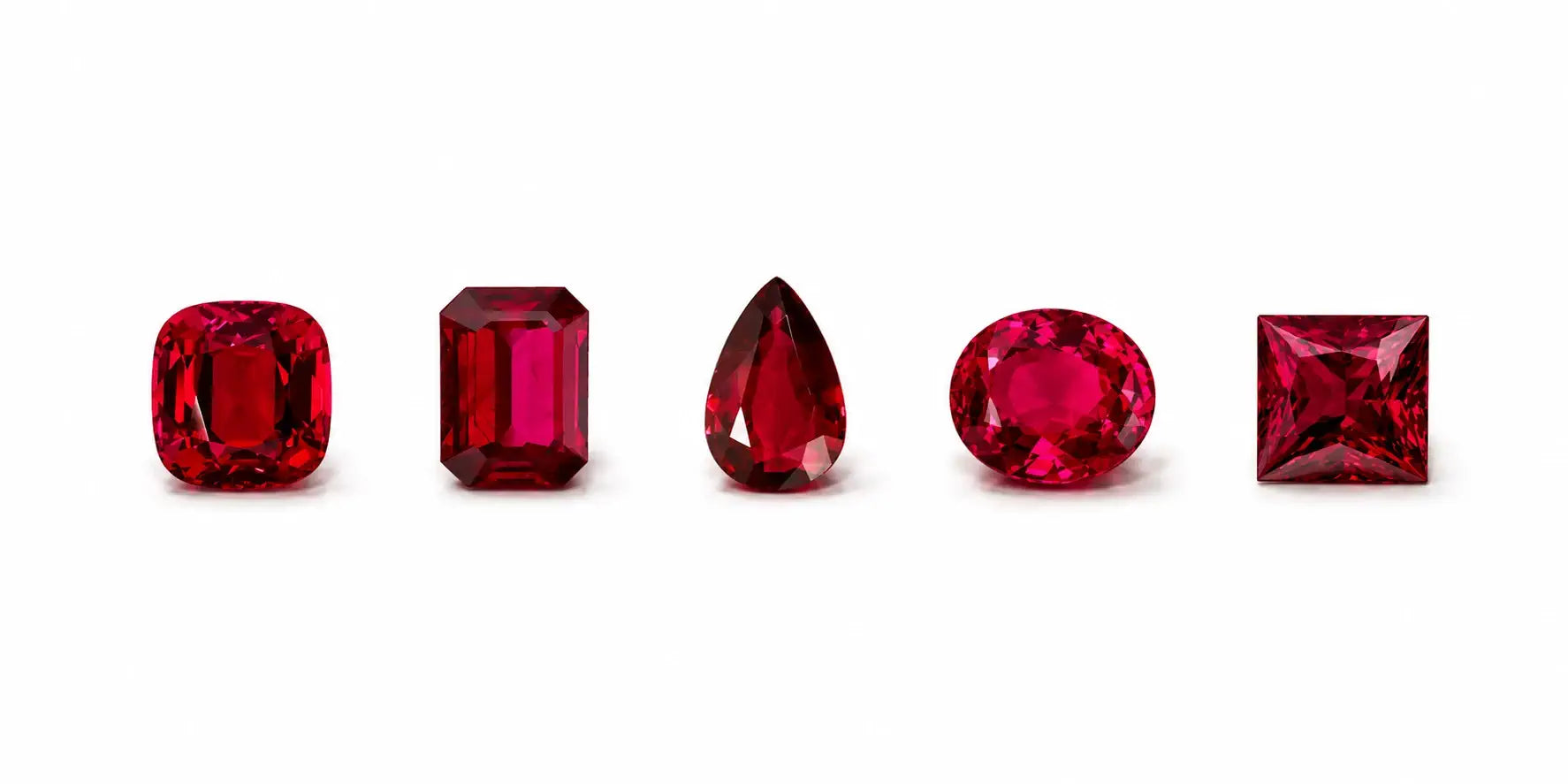
Ruby color can range from orangey red to purplish red. In quality assessment, color is particularly important. Fine stones are often described as having a vivid red to slightly purplish-red appearance, with enough saturation to feel rich without becoming so dark that brightness is lost.
Inclusions are common in natural ruby. They may appear as crystals, fine needles, healed fissures or other growth features. Their importance depends on where they are positioned, how visible they are and whether they affect durability.
A completely clean appearance should not automatically be treated as the only standard of beauty. In colored gemstones, character and color often matter more than clinical perfection.
For a closer look at origins, shapes, characteristics and treatments, GEMNAT’s Ruby Full Guide provides a useful introduction before choosing a stone.
Ruby Symbolism Across History
The history of ruby symbolism is filled with beliefs about protection, vitality and success. Ancient cultures attributed powers to gemstones that reflected their appearance, rarity and importance. Because ruby resembled flame and blood, it became associated with life force and an inner fire that could not easily be extinguished.

Copyright: British Vogue
These traditions should be understood as lore rather than medical or scientific fact. Their value lies in what they reveal about the human response to ruby: people consistently saw more than color. They saw energy, courage and a form of beauty that appeared active rather than still.
The July Birthstone
Ruby is the traditional July birthstone, making it especially meaningful for birthdays, family jewelry and personalized gifts. It is also associated with the 15th and 40th wedding anniversaries, occasions that suit a gemstone connected with enduring passion and commitment.
GEMNAT’s birthstone calendar places ruby within the wider tradition of monthly gemstones. As a July birthstone, it can be worn in a way that feels personal without relying on obvious motifs. A finely proportioned pendant, a pair of earrings or a discreet bracelet can carry the connection privately.
Ruby Engagement Ring Meaning
A ruby engagement ring communicates a love that is confident, individual and deeply felt. The traditional ruby engagement ring meaning draws from passion, devotion and courage, qualities that give the stone a natural place in commitment jewelry.
Ruby also offers strong visual possibilities. Against white gold, its red color appears crisp and contemporary. Yellow gold creates a warm, regal contrast, while rose gold produces a more tonal and romantic composition. Diamonds can be used as side stones or a halo to introduce brightness without competing with the center ruby.

Shape changes the personality of the design. An oval ruby can feel classical and graceful. A round stone creates balance, while a pear shape adds movement. An emerald cut gives the color a more architectural frame.
GEMNAT’s collection of ruby rings illustrates how setting style, proportion and gold color can be personalized around the wearer. The designs are made to order in 18k white, yellow or rose gold, with different shapes and settings available.
The best expression of ruby engagement ring meaning is not necessarily the largest or most elaborate option. It is a design whose color, setting and scale feel true to the relationship it represents.
Choosing Natural Ruby Jewelry
When considering natural ruby jewelry, begin with the complete visual impression. Color is important, but it should be evaluated alongside cut, clarity, carat weight and proportion. A smaller ruby with lively, balanced color may have greater presence than a larger stone that appears overly dark.
Ask whether the ruby has been treated. Heat treatment is common and can improve color or clarity, while other processes, including diffusion or glass filling, affect value differently. Treatment should be disclosed, and significant stones may benefit from an independent laboratory report.
 GIA advises buyers to assume that a ruby has been heated unless reliable testing indicates otherwise. Rubies with independent confirmation that there is no evidence of heat may command a premium because of their comparative rarity.
Origin may add interest and, in certain cases, influence value, but a famous source does not guarantee quality. Each ruby should still be judged individually. Color, transparency, cut and overall beauty remain central.
GEMNAT’s ruby jewelry collection offers made-to-order designs in natural ruby and solid 18k gold. The collection includes rings, earrings, pendants and bracelets that can be adjusted through gemstone shape, size and gold color.
Wearing Ruby Jewelry With Restraint
The intensity of ruby allows it to work beautifully in restrained designs. A solitaire ring places full attention on the stone, while a fine pendant introduces color without dominating an outfit.
Ruby earrings bring warmth near the face and can range from discreet solitaire designs to halos, motifs and hoops. Ruby pendants offer a more personal way to keep the gemstone close, while ruby bracelets allow the color to appear through movement.

Copyright: Getty Images
For regular wear, consider how exposed the gemstone will be. Ruby is durable, but no natural stone is indestructible. A secure setting and sensible care help protect edges, points and any significant surface-reaching features.
Caring for Ruby
Warm water, mild soap and a soft brush are generally suitable for routine cleaning. Care should nevertheless reflect the stone’s treatment history.
GIA notes that ultrasonic and steam cleaning are usually safe for untreated and heat-treated ruby, but fracture-filled, cavity-filled or dyed material should be treated more cautiously and cleaned only with a damp cloth.
Store ruby pieces separately from softer gemstones to prevent scratching them, and avoid hard impacts during exercise, housework or other demanding activities. Periodic professional inspection is especially valuable for rings, as it allows the setting and stone to be checked before a small concern becomes damaged.
Creating a Personal Ruby Piece
The strength of natural ruby jewelry lies in the meeting of an ancient gemstone and an individual design. A classic halo may reflect historical grandeur, while a clean solitaire can make the same red color feel distinctly contemporary.
Engraving, gold tone, stone shape and proportion can make the symbolism private and precise. The aim is not simply to create an impressive object, but to produce a piece that belongs naturally to the person who will wear it.
Through GEMNAT’s custom jewelry service, a piece can begin with a reference image, drawing or original idea. Gemologists and designers can then develop the concept around the selected gemstone and the way the jewelry is intended to be worn.
 GEMNAT also outlines its approach to ethical and conflict-free gemstones, providing further context for customers who wish to understand how natural stones are selected.
A Stone With Presence and Purpose
Ruby has earned its place in fine jewelry through more than color. Its history speaks of royalty and authority. Its traditions connect it with love, courage and vitality. Its gemological properties give it the durability required for jewels intended to accompany important moments.
Ultimately, the most meaningful ruby meaning is personal. A ruby may celebrate the July birthstone, express the depth behind the ruby engagement ring meaning, or mark a moment when confidence mattered. The stone carries centuries of symbolism, but its purpose is completed by the person who chooses it.
To explore a natural ruby or create a design with individual significance, contact GEMNAT’s non-commissioned jewelry experts for personalized guidance on gemstone selection, 18k gold settings and customization.

Written by Gemnat Customer Service